Yes, for soreness. Several meta-analyses of randomized trials found that massage after hard exercise reduces delayed onset muscle soreness and the feeling of fatigue for one to four days. It does not make you stronger, faster or fitter: a 2020 review of 29 trials found no effect on strength, jump, sprint or endurance. The benefit is comfort, not performance.
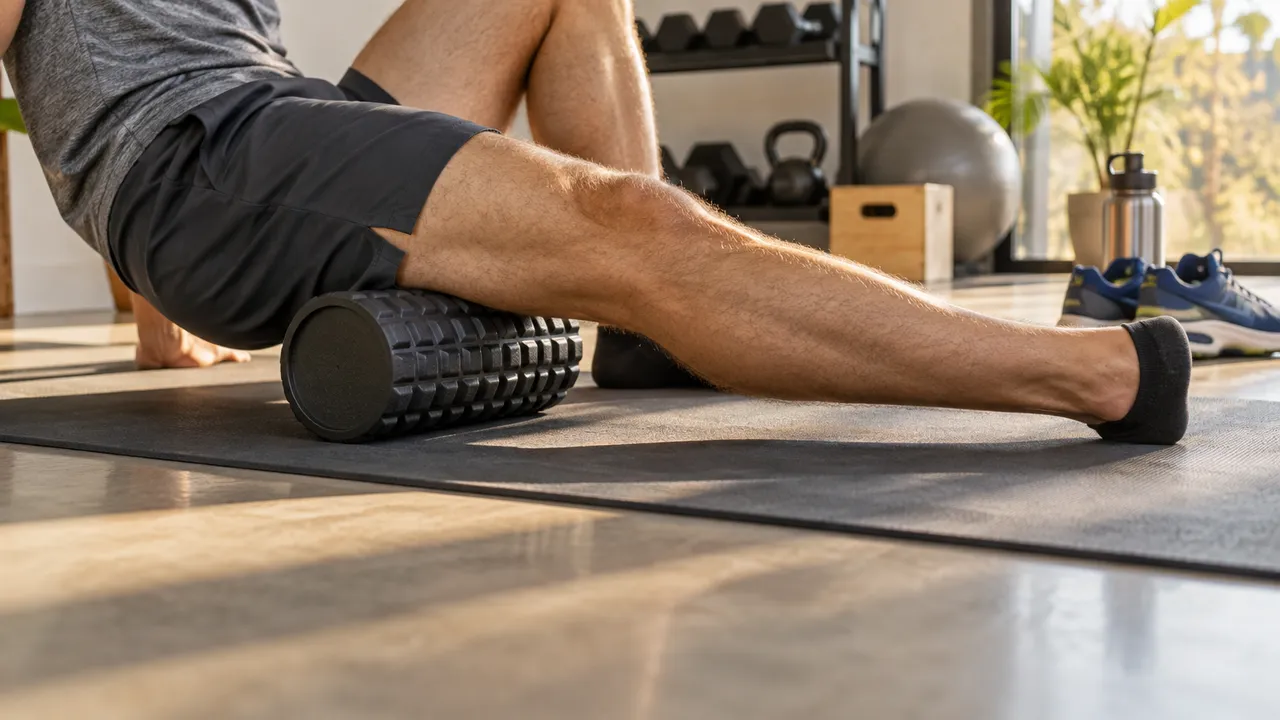
Massage after training has one well-supported benefit: you feel less sore. Claims beyond that, such as faster gains or better performance, do not hold up in pooled trial data. This article goes through the main reviews, what they measured, and where their limits are.
What is muscle soreness after a workout?
Delayed onset muscle soreness (DOMS) is the ache and stiffness that builds a day or two after hard or unfamiliar exercise, such as a first leg day after a break or a long downhill run. A 2019 review in the Journal of International Medical Research describes it as a symptom of exercise-induced muscle injury that is common in athletes and people who train for fitness. Researchers usually rate it at 24, 48 and 72 hours after exercise, and often measure creatine kinase (CK), a blood marker that rises when muscle fibers are damaged.
Does massage reduce muscle soreness after exercise?
Yes. The reviews agree on the direction of the effect and differ on its size.
| Review | What was pooled | Finding on soreness |
|---|---|---|
| Dupuy and colleagues, Frontiers in Physiology, 2018 (meta-analysis of recovery methods) | 99 studies of massage, cold water, compression, stretching and other methods | Massage was the most effective method for reducing DOMS and perceived fatigue, with an effect seen up to 96 hours after exercise. |
| Guo and colleagues, Frontiers in Physiology, 2017 (meta-analysis) | 11 randomized trials, 504 participants | Soreness ratings were lower with massage at 24, 48 and 72 hours, with the largest effect at 48 hours. CK was also lower. |
| Davis and colleagues, BMJ Open Sport and Exercise Medicine, 2020 (systematic review and meta-analysis) | 29 randomized studies, 1,012 participants | A statistically significant 13% improvement in DOMS. Results varied widely between studies because of one outlier, so the authors call the true size of the benefit uncertain. |
| Poppendieck and colleagues, Sports Medicine, 2016 (meta-analytical review) | 22 randomized trials on performance recovery | Not a soreness review. Effects on recovering performance were small and partly unclear. |
The Dupuy review also found that massage and cold exposure were the most effective methods for lowering blood markers of muscle damage and inflammation (CK and interleukin-6) after exercise.
There is a real limit to this evidence. Soreness is rated by the person who feels it, and nobody can be blinded to whether they got a massage. The Dupuy authors state that a placebo effect could not be eliminated and that publication bias may have inflated the estimates. The Davis authors make the same point about subjective soreness scales. So the fair summary is: massage probably reduces soreness, and part of that may be expectation.
Does massage improve strength, speed or muscle growth?
No. The 2020 review by Davis and colleagues is the largest on this question, and it found no evidence that massage improves measures of strength, jump, sprint, endurance or fatigue. Flexibility scores rose by 7%. The authors wrote that their findings should make athletes and coaches cautious about claims that massage will provide benefits beyond these.
The 2016 review by Poppendieck and colleagues looked at how well performance bounces back after exercise. Across 22 randomized trials the effects were small. Short massages of 5 to 12 minutes showed a larger effect (+6.6%) than longer ones (+1.0%), and untrained people gained more (+6.5%) than trained athletes (+2.3%). The authors questioned whether such limited effects justify the wide use of massage as a recovery tool in competitive sport.
The Guo review did find better muscle force and peak torque after massage in the days following hard exercise. That means getting back to normal a little sooner, not ending up stronger than before. No review shows that massage builds muscle. It also does not remove body fat. Training builds muscle, and a calorie deficit drives fat loss.
Does vibration massage help with soreness?
The data point the same way as for hands-on massage. A 2019 meta-analysis by Lu and colleagues pooled 10 randomized trials with 258 participants. Vibration improved soreness ratings at 24, 48 and 72 hours after exercise and lowered CK at 24 and 48 hours, but not at 72 hours. The authors concluded that vibration is useful for easing DOMS and that more studies are needed on how it works. The trials used different vibration devices and settings, so the result does not transfer directly to any one machine.
When should you get a massage after training?
Most trials applied massage soon after the workout. The Dupuy review summarizes the earlier evidence this way: a 20 to 30 minute massage performed immediately after exercise or up to 2 hours later reduces soreness at 24 hours. Whether a massage on the next day works as well has not been tested as thoroughly.
- Pick the hard daysSoreness follows unfamiliar or very heavy sessions. That is where the trials found a benefit.
- Go the same day if you canThe best-studied window is from right after exercise to about 2 hours later.
- Keep pressure comfortableThe goal is less soreness, so there is no reason to accept painful pressure on freshly worked muscle.
- Judge it by how you feelIf you are less sore and move more easily over the next two days, it did its job. Do not expect a change in strength numbers.
Questions people ask
Does massage get rid of DOMS?
It reduces it, according to several meta-analyses. A 2017 analysis of 11 randomized trials found lower soreness ratings at 24, 48 and 72 hours after exercise, with the largest effect at 48 hours.
Will a massage after training make the next workout stronger?
Not measurably. In pooled trials, massage did not raise strength, jump height, sprint speed or endurance. What changes is how sore and tired you feel, which can make the next session more comfortable.
How soon after a workout should you get a massage?
The best-studied timing is immediately after exercise or up to 2 hours later, with massages of 20 to 30 minutes, as summarized in a 2018 meta-analysis in Frontiers in Physiology.
Is vibration massage as good as manual massage for soreness?
They have not been compared well. A 2019 meta-analysis of 10 trials found that vibration reduced soreness at 24, 48 and 72 hours, which is similar in direction to manual massage.
Does massage after a workout help build muscle or lose fat?
No. Reviews show less soreness and slightly better flexibility, not muscle growth. Massage does not remove fat. Fat loss comes from a calorie deficit.
Sources
- Dupuy O et al. An Evidence-Based Approach for Choosing Post-exercise Recovery Techniques: A Systematic Review With Meta-Analysis. Frontiers in Physiology, 2018
- Davis HL et al. Effect of sports massage on performance and recovery: a systematic review and meta-analysis. BMJ Open Sport and Exercise Medicine, 2020
- Guo J et al. Massage Alleviates Delayed Onset Muscle Soreness after Strenuous Exercise: A Systematic Review and Meta-Analysis. Frontiers in Physiology, 2017
- Lu X et al. Does vibration benefit delayed-onset muscle soreness?: a meta-analysis and systematic review. Journal of International Medical Research, 2019
- Poppendieck W et al. Massage and Performance Recovery: A Meta-Analytical Review. Sports Medicine, 2016
This article is general information, not medical advice. Massage does not diagnose or treat any condition. If you have a health condition, ask your doctor whether massage is right for you.
 Your sessionAre Cupping Marks and Bruising Normal? How Long They Last
Why vacuum cupping leaves round marks, how long they last according to Cleveland Clinic and Harvard, who bruises more, and when to call a doctor.
5 min read Your sessionFirst Body Sculpting Massage: What to Expect Step by Step
A first body sculpting massage step by step: health questions, lymphatic drainage, vibration, cupping, how each feels, and what is normal after.
5 min read Your sessionHow Long Does It Take to See Fat Loss Results?
Honest timelines: 1 to 2 pounds a week per the CDC, 2 to 3 months for fat freezing, months for liposuction swelling, and what massage can change.
5 min read