Vacuum cupping massage uses cups that create suction and are glided over oiled skin, lifting the skin and the tissue under it. In a small lab study, suction raised skin blood flow for a few minutes. It can leave round marks that fade in a week or two. NCCIH says cupping may help reduce pain, but the evidence is not very strong. It does not remove fat.
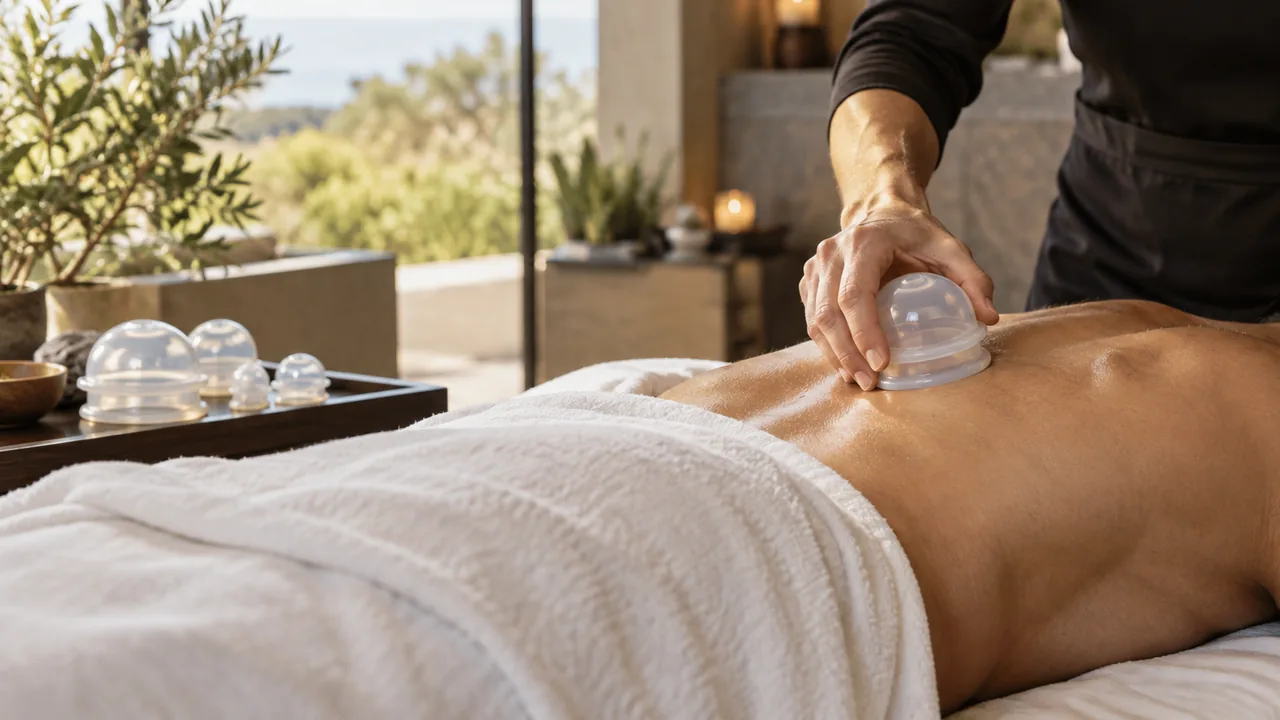
Vacuum massage, also called cupping massage or running cupping, is a hands-on technique in which suction replaces pressure. A regular massage pushes tissue down. A cup pulls it up. In body work it is done with oil so the cups can slide. Here is how it works, what the evidence says and where the risks are.
What is vacuum cupping massage?
The National Center for Complementary and Integrative Health (NCCIH) describes cupping as creating suction on the skin with a glass, ceramic, bamboo or plastic cup. The vacuum is made either by heating the cup or by attaching a suction device. There are several forms, and only one of them is a massage.
| Type | How it is done | Skin pierced | Used in massage sessions |
|---|---|---|---|
| Dry (static) cupping | Cups are placed and left in one spot | No | Sometimes |
| Running cupping (vacuum massage) | Lotion or oil is applied, then the cups are moved in different directions over the area | No | Yes. This is the form used in body sculpting massage |
| Wet cupping | The skin is pierced and blood flows into the cup | Yes | No. It is not a massage technique |
In Body Sculpt sessions, a silicone cup glides over oiled skin, and vacuum cupping is added from the second or third session.
How does cupping work on skin and tissue?
Cleveland Clinic explains that cupping uses the force of suction to pull blood toward the surface of the skin, and that this force expands and breaks open tiny blood vessels (capillaries) under the skin. Suction also draws fluid into the treated area. Beyond that, the mechanism is not settled. In Cleveland Clinic's words, experts are still exploring how cupping eases pain, and there is not a lot of research on the therapy.
One small laboratory study shows how strong the skin response is. In 2020, researchers working at the University of Illinois applied static cups to the upper arm of 12 healthy adults at two suction levels for 5 or 10 minutes. Peak skin blood flow rose to about 8 to 17 times the resting level, and it settled back within roughly 5 to 7 minutes after the cups came off. The study measured skin only, on one muscle, and the cups were not moved.
A running cupping pass follows a simple sequence.
- Oil the skinLotion or oil lets the cup slide without dragging.
- Set the suctionThe cup is placed and air is removed so the skin lifts into the cup. You feel pulling and skin tightness.
- Glide the cupThe therapist moves the cup in different directions over the area. Suction is kept low enough that the cup still slides.
- Release and check the skinThe cup is lifted and the skin is checked for redness and marks before the next pass.
What do NCCIH and research reviews say about cupping?
- NCCIH: there has been some research on cupping, but most of it is of low quality. Cupping may help reduce pain, but the evidence is not very strong. There is not enough high-quality research to reach conclusions about other conditions.
- Cleveland Clinic (2023): there is mixed evidence on the benefits of cupping, and the treatment risks are generally low.
- A 2025 meta-analysis in BMJ Open pooled 10 randomized trials in adults with chronic musculoskeletal pain. Cupping reduced pain intensity right after treatment, with evidence rated moderate quality, although results varied widely between trials. It did not improve physical function or mental health. The analysis covered only the effect right after treatment, not longer-term results. Only one of the trials used cupping massage.
- Skin and body shape: the American Academy of Dermatology reviewed a spa treatment that combines deep massage with vacuum-like lifting of the skin. Study results vary, the improvements in cellulite were temporary, and cellulite tended to return within 1 month of stopping. Those studies were done in women.
In short, the best-supported effect of cupping is short-term pain relief, and even that rests on limited studies. Cupping does not remove fat, and no source above shows that it changes body fat.
Why does cupping leave marks, and how long do they last?
The same suction breaks open small capillaries under the skin, which leaves round red marks. Cleveland Clinic gives a week or two for them to fade, and the session itself should not be painful.
Who should not have cupping?
NCCIH lists possible side effects: persistent skin discoloration, scars, burns and infections. Cupping may also worsen eczema or psoriasis. Cleveland Clinic advises against cupping during pregnancy and for people who have any of the following.
- Anemia
- A pacemaker
- Bleeding disorders such as hemophilia
- Blood clotting problems such as deep vein thrombosis, or a history of stroke
- Cardiovascular disease
- Skin conditions, including eczema and psoriasis
- Seizures (epilepsy)
Questions people ask
Does vacuum cupping massage burn fat or remove cellulite?
No. Cupping does not remove fat. For cellulite, the American Academy of Dermatology found that results from a massage and vacuum treatment varied between studies and were temporary, with cellulite returning within about 1 month of stopping.
Will cupping massage leave marks?
It can. Round red marks are an expected result of the suction. According to Cleveland Clinic, they fade within a week or two.
Does cupping massage hurt?
It should not. Cleveland Clinic describes skin tightness during the session and mild soreness afterward, not severe discomfort.
What is the difference between dry cupping and wet cupping?
In dry cupping the skin is not pierced. In wet cupping the skin is pierced and blood flows into the cup. Vacuum massage is a form of dry cupping in which the cups are moved over oiled skin.
Is cupping proven to work?
Partly. NCCIH says cupping may help reduce pain, but the evidence is not very strong and most research is of low quality. There is not enough good research to reach conclusions about other uses.
Sources
- NCCIH (NIH): Cupping (2018)
- Cleveland Clinic: Cupping Therapy (updated 2023)
- Jia Y et al. Effects of cupping therapy on chronic musculoskeletal pain and collateral problems: a systematic review and meta-analysis. BMJ Open, 2025
- Wang X et al. Effect of Pressures and Durations of Cupping Therapy on Skin Blood Flow Responses. Frontiers in Bioengineering and Biotechnology, 2020
- American Academy of Dermatology: Cellulite treatments: What really works?
This article is general information, not medical advice. Massage does not diagnose or treat any condition. If you have a health condition, ask your doctor whether massage is right for you.
 TechniquesDeep Tissue vs Sports vs Swedish Massage: The Difference
Swedish massage is gentle and full-body, deep tissue works tight muscles with firm pressure, sports massage targets the muscles you train. How to choose.
5 min read TechniquesDoes Massage Burn Fat? What the Research Actually Says
No. Massage does not burn fat. A plain review of the studies on massage, circumference, cellulite and fat thickness, and how strong they are.
6 min read TechniquesDoes Wood Therapy (Maderotherapy) Work? The Evidence
Wood therapy is massage with wooden rollers and cups, sold for fat and cellulite. No clinical studies of it appear in PubMed. What related research shows.
5 min read