No. Sweat is mostly water and salt, released to cool the body. Weight lost in a sauna, sweat belt or body wrap is almost all water, and it returns when you drink. In a 2014 study, men lost about 0.5 kg (1.1 lb) in 20 minutes of dry sauna. The Federal Trade Commission says weight-loss claims for wraps and body belts are false.
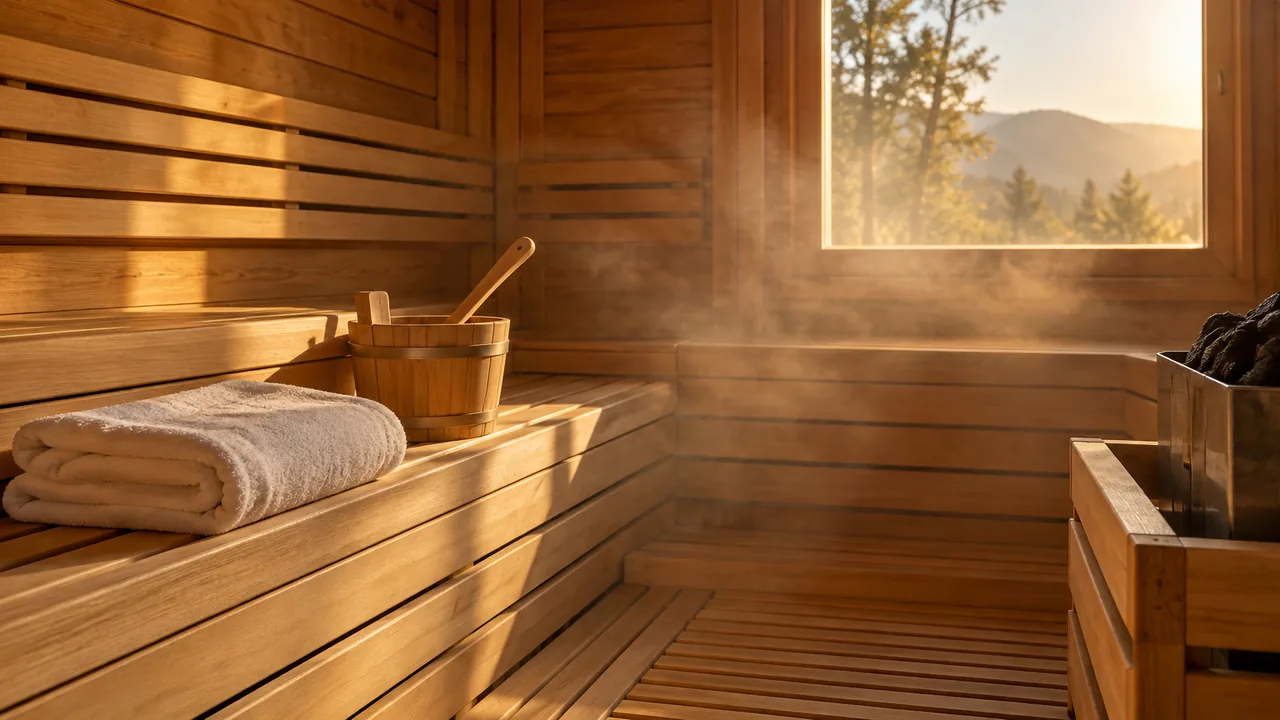
No. Sweating cools you down. It does not burn fat, and the weight you lose by sweating is almost all water, which returns as soon as you drink. That holds for saunas, sweat belts, sauna suits and body wraps alike.
Does sweating burn fat?
A 2019 review of sweat gland physiology in the journal Temperature describes sweat from the main sweat glands as mostly water and sodium chloride, which is salt. Its primary job is heat dissipation: water evaporating from the skin carries heat away from the body.
Sweat therefore tells you how hot you are, not how much fat you are using. You can sweat heavily sitting still in a hot room and sweat far less doing a hard workout in the cold. Fat is lost when the body draws on stored fat for energy over time, which takes a calorie deficit.
A related myth is that sweating flushes toxins out. The same review concluded that the role of sweating in eliminating waste products and toxicants seems to be minor compared with the kidneys and the gut.
How much weight do you lose in a sauna, and is it fat?
Almost all of it is water. Harvard Health Publishing notes that the dry heat of a sauna can reach 185 degrees Fahrenheit (85 Celsius), that the pulse rate jumps by 30% or more, and that the average person pours out about a pint of sweat during a short stay. A pint of water weighs roughly one pound.
A 2014 study in The Scientific World Journal measured it. Researchers weighed 674 sedentary students aged 19 to 20, then weighed them again after two 10-minute sessions in a dry sauna at 90 Celsius (194 Fahrenheit) with a 5-minute break between them. Men lost 0.50 kg (1.1 lb) on average and women 0.37 kg (0.8 lb). Overweight and obese men lost the most, 0.82 kg (1.8 lb) on average.
The authors note that the loss cannot be attributed entirely to dehydration, since the body also uses some stored energy in the heat. Their practical conclusion is still about fluid: one kilogram of lost body mass generally corresponds to one liter of sweat, and it should be replaced during and directly after the sauna. They also warn that people with a higher BMI are at higher risk of dehydration.
Do sweat belts, sauna suits and body wraps work?
| Method | What it does | What happens to fat |
|---|---|---|
| Sauna | Raises skin temperature; about a pint of sweat in a short stay | Nothing measurable. Weight returns with fluids |
| Sweat belt or waist trimmer | Traps heat so the skin under it sweats more | Nothing. The fat under the belt is unchanged |
| Sauna suit | Blocks evaporation, so the body overheats and sweats more | Nothing extra. Raises the risk of overheating |
| Body wrap | Compresses the area and makes it sweat | Nothing. Water lost as sweat returns when you drink |
| Warming creams and gels | Create a feeling of heat on the skin | Nothing |
The Federal Trade Commission (FTC) addresses these products directly. Its Gut Check guide for media, published in 2014, lists seven weight-loss claims to treat as false. The seventh is that a product causes substantial weight loss by being worn on the body or rubbed into the skin. The FTC's reasoning: weight loss is an internal metabolic process, and nothing you wear or apply to the skin can cause substantial weight loss. It names patches, creams, lotions, wraps and body belts.
Is it risky to sweat off weight?
It can be. The CDC reported in 1998 on three college wrestlers who died within about a month of each other in late 1997 while cutting weight. All three had restricted food and fluids and exercised hard in hot rooms wearing vapor-impermeable suits. They lost between 3.5 and 9 pounds in their final hours. One death was attributed to hyperthermia, with a body temperature of 108 degrees Fahrenheit, and one to rhabdomyolysis, a breakdown of muscle tissue. College wrestling rules were then changed to ban saunas, steam rooms and vapor-impermeable suits for weight loss.
Those are extreme cases, but the mechanism is the same at any scale: you lose water and your body temperature climbs.
What should you do instead?
- Use heat for comfort, not for weightA sauna can be relaxing. Count it as recovery time, not as fat loss.
- Replace what you sweatThe 2014 study's rule of thumb is about one liter of fluid for each kilogram (2.2 lb) lost.
- Ignore the weigh-in after sweatingIt shows water loss. Weigh in the morning and compare weekly averages.
- Put the effort into the deficitFat loss comes from eating less than you burn over weeks, with training to keep muscle.
- Skip products that promise loss by being wornBy the FTC's standard, weight-loss claims for belts, wraps, patches and creams are false.
Questions people ask
Do you burn more fat when you sweat more?
No. Sweat rate reflects how much heat your body needs to shed. It depends on temperature, humidity and clothing as much as on effort, and it does not measure fat use.
How much water weight can you lose in a sauna?
In a 2014 study, men lost 0.50 kg (1.1 lb) on average in 20 minutes of dry sauna: two 10-minute sessions at 90 Celsius (194 Fahrenheit). Harvard Health puts a short stay at about a pint of sweat. The weight returns when you rehydrate.
Do sweat belts reduce belly fat?
No. A belt makes the skin under it sweat. The FTC states that nothing you wear can cause substantial weight loss and names body belts among products with false weight-loss claims.
Do body wraps make you lose inches?
A wrap does not remove fat. It makes the skin under it sweat, and water lost as sweat returns when you drink. The FTC lists wraps among the products whose weight-loss claims are false.
Does sweating remove toxins?
Hardly. A 2019 review found the role of sweat in removing waste products and toxicants to be minor compared with the kidneys and the gut.
Is it safe to exercise in a sauna suit to lose weight?
It raises the risk of overheating and dehydration. The CDC documented deaths in wrestlers who exercised in vapor-impermeable suits to cut weight. Talk to your doctor before any rapid weight-loss method.
Sources
- Baker LB. Physiology of sweat gland function: the roles of sweating and sweat composition in human health. Temperature, 2019
- Harvard Health Publishing: Sauna health benefits, are saunas healthy or harmful?
- Podstawski R et al. Sauna-induced body mass loss in young sedentary women and men. ScientificWorldJournal, 2014
- CDC MMWR: Hyperthermia and dehydration-related deaths associated with intentional rapid weight loss in three collegiate wrestlers (1998)
- Federal Trade Commission: Gut Check: A Reference Guide for Media on Spotting False Weight Loss Claims (2014)
This article is general information, not medical advice. Massage does not diagnose or treat any condition. If you have a health condition, ask your doctor whether massage is right for you.
 Fat lossCalorie Deficit for Men: What It Is and How Big It Should Be
A calorie deficit means eating fewer calories than you burn. How to estimate your needs, why 500 a day is the usual start, and why bigger is not better.
5 min read Fat lossCan You Lose Fat and Build Muscle at the Same Time?
Body recomposition is real but depends on where you start. Who manages it in studies, and the training, protein and deficit it takes.
5 min read Fat lossDo Poor Sleep and Stress Cause Belly Fat? What Studies Show
Short sleep makes people eat more and, in a small trial, added abdominal fat. The stress and cortisol link is plausible but less proven.
5 min read