Track three things under the same conditions: a weekly average of morning weight, waist circumference measured just above the hip bones right after you breathe out, and photos in the same light and pose every two to four weeks. Body fat readings from scales, calipers and scans shift with food, water and equipment, so use them for long-term trends only.
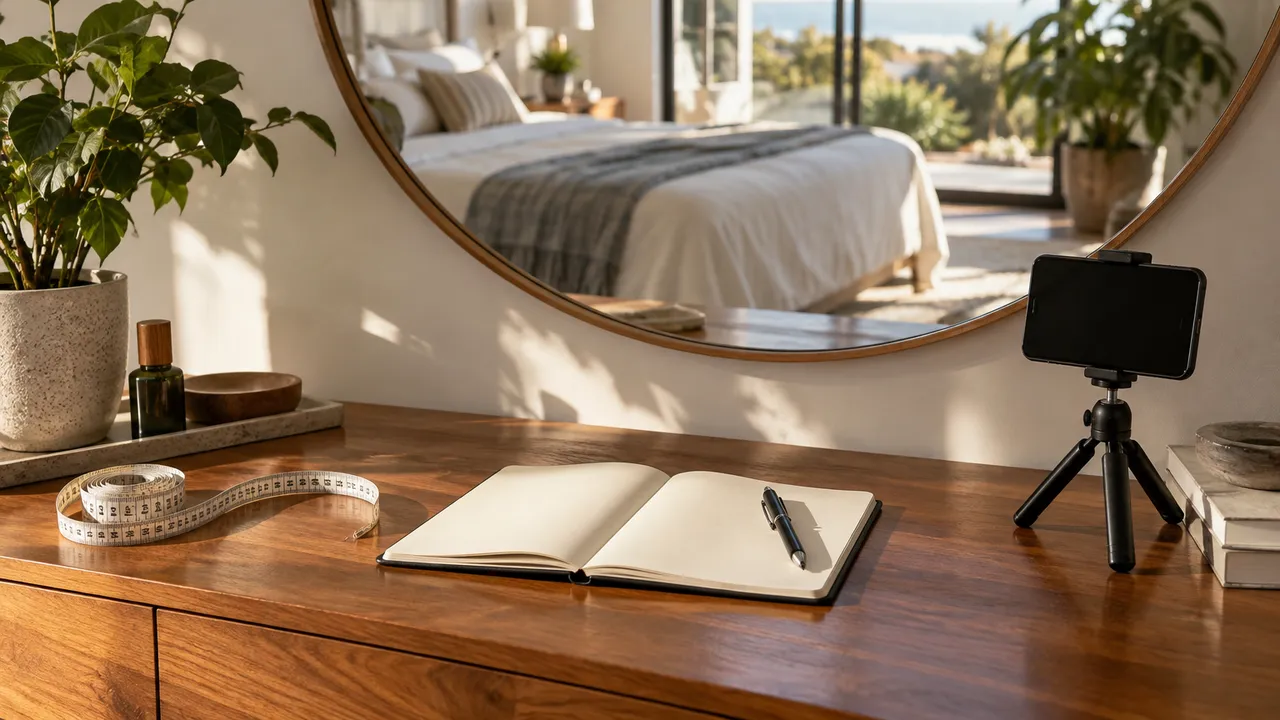
Use three measures together and take each one the same way every time: a weekly average of morning weight, a waist measurement, and photos. Any single number can mislead. Three that agree over a month rarely do.
Why is the scale misleading?
The scale weighs everything: fat, muscle, water, and the food and drink still in your gut. Cleveland Clinic dietitian Maxine Smith, RD, notes that weight can normally vary within about a 5-pound range, and that an overnight gain with bloating may be water retention, for example after salty food or alcohol.
Weight can also sit still while your body changes. A 2020 consensus statement in Nature Reviews Endocrinology reports that reductions in waist circumference from exercise or diet are observed with or without weight loss. That is why a tape measure belongs next to the scale.
The scale is still useful if you weigh consistently. Cleveland Clinic's advice: weigh first thing in the morning after using the restroom and before eating or drinking, on the same scale, on a hard flat floor, wearing as little as possible. Then compare weekly averages, not single days.
How do you measure your waist correctly?
The National Heart, Lung, and Blood Institute (part of the NIH) and the CDC give the same core instructions: stand, place the tape around your middle just above the hip bones, and measure just after you breathe out. The other details in the steps below are common practice that keeps readings comparable.
- Stand up straightBoth agencies say to measure standing. Use bare skin, keep your abdomen relaxed, and do not pull your stomach in.
- Find the top of your hip bonesPlace the tape around your middle, just above the hip bones. This is usually higher than where a belt sits.
- Level the tapeKeep it flat all the way around, level with the floor, snug against the skin without digging in.
- Breathe out, then readThe CDC says to breathe in, then measure just after you breathe out.
- Write it downRecord the number with the date. Measure at the same time of day, every one to two weeks.
The 2020 consensus statement describes two accepted sites: the top of the hip bone, used by the NIH, and the midpoint between the lowest rib and the hip bone, used by the World Health Organization. Its recommendation is to choose one protocol and use it consistently.
Waist size is also a health marker. According to the NHLBI, a waist of more than 40 inches (102 cm) for men increases health risk.
How should you take progress photos?
Photos show changes in shape that numbers miss, but only if the conditions match. Light and posture alone can change how lean a body looks.
- Same place, same light source, same time of day. Morning before breakfast works well.
- Same distance and camera height. Mark a spot on the floor and set the phone on a shelf or tripod at waist level.
- Same poses: front, side and back, standing relaxed with arms slightly away from the body.
- Same clothing, such as the same shorts.
- No flexing, no pulling the stomach in, and no post-workout pump.
- Every two to four weeks. Compare photos a month or more apart, side by side.
How accurate are body fat percentage tests?
Less accurate than the decimal point suggests. A 2021 narrative review in the journal Nutrients compared the common methods used in sport.
| Method | What the 2021 review reports |
|---|---|
| DXA scan | Reliable under a strict protocol, but in one study a meal raised the fat mass reading by 2.6%. Two scanner models from the same manufacturer gave fat mass readings 18% apart for the same players. |
| Bioimpedance (smart scales, handheld devices) | Affected by hydration and temperature, with large variability between devices. Useful for tracking only if testing is standardized. |
| Skinfold calipers | Least affected by meals, hydration and daily activity. A 1 cm shift in the pinch site changes the result, and one athlete's estimate ranged from about 4.3% to 8.2% depending on the equation. |
| Air displacement (Bod Pod) | High repeatability, but sensitive to clothing, body hair, moisture and temperature. |
| Underwater weighing | Accurate with a qualified technician. Assumptions about lung volume and tissue density add error. |
The review's practical advice for calipers is to track the sum of skinfold thicknesses in millimeters instead of converting it to a percentage. The same logic applies at home: a move from 22% to 21% on a smart scale can be water, not fat. Use the same device under the same conditions and judge the direction over months.
How often should you measure?
| Measure | How often | Conditions |
|---|---|---|
| Body weight | Daily or weekly, compared as weekly averages | Morning, after the restroom, before food or drink, same scale |
| Waist | Every 1 to 2 weeks | Same site, after breathing out, same time of day |
| Photos | Every 2 to 4 weeks | Same light, distance, pose and clothing |
| Body fat test | Every few months at most | Same device and same preparation each time |
If you get body sculpting massage, measure before a session or on a morning without one. Any change in the tape reading right after a massage is fluid, not fat, and it would blur the trend you are trying to see.
Questions people ask
Where exactly do I measure my waist?
The NIH and CDC say to place the tape around your middle, just above the hip bones, and to measure just after you breathe out. Use the same spot every time.
Why is my waist smaller but my weight the same?
You may have lost fat while holding water or gaining muscle. A 2020 consensus statement notes that waist reductions from exercise or diet occur with or without weight loss.
Are smart scales accurate for body fat?
They are affected by hydration and temperature, and a 2021 review found large variability between devices. Use one device under the same conditions and watch the long-term trend.
How often should I weigh myself?
Daily or weekly both work if you are consistent. Cleveland Clinic recommends the morning, after the restroom and before eating or drinking, on the same scale.
What is the most accurate way to measure body fat?
No common method is exact. DXA is widely treated as the reference, but a 2021 review shows its readings change with food, hydration and the scanner used. Consistent conditions matter more than the method.
Sources
- NHLBI (NIH): Heart-Healthy Living, Aim for a Healthy Weight (2025)
- CDC: Healthy Weight, Diabetes (how to measure your waist, 2024)
- Ross R et al. Waist circumference as a vital sign in clinical practice: a Consensus Statement. Nat Rev Endocrinol, 2020
- Kasper AM et al. Come Back Skinfolds, All Is Forgiven: a narrative review of common body composition methods. Nutrients, 2021
- Cleveland Clinic: The Best Time To Weigh Yourself (2023)
This article is general information, not medical advice. Massage does not diagnose or treat any condition. If you have a health condition, ask your doctor whether massage is right for you.
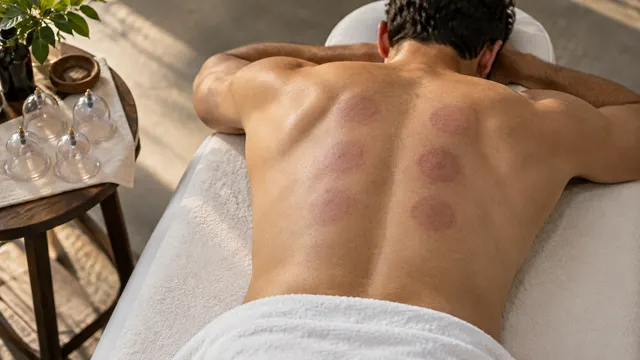 Your sessionAre Cupping Marks and Bruising Normal? How Long They Last
Why vacuum cupping leaves round marks, how long they last according to Cleveland Clinic and Harvard, who bruises more, and when to call a doctor.
5 min read Your sessionDoes Massage Help Recovery After a Workout? The Evidence
Meta-analyses show massage after exercise reduces muscle soreness and fatigue. It does not improve strength, speed or endurance. Here is the data.
5 min read Your sessionFirst Body Sculpting Massage: What to Expect Step by Step
A first body sculpting massage step by step: health questions, lymphatic drainage, vibration, cupping, how each feels, and what is normal after.
5 min read