For losing fat mass, aerobic exercise does more for the time invested: in an 8-month randomized trial, cardio and cardio plus weights reduced fat more than weights alone. Strength training adds or preserves muscle and still lowers body fat percentage. The CDC recommends both: at least 150 minutes of moderate aerobic activity and at least two days of muscle-strengthening work a week.
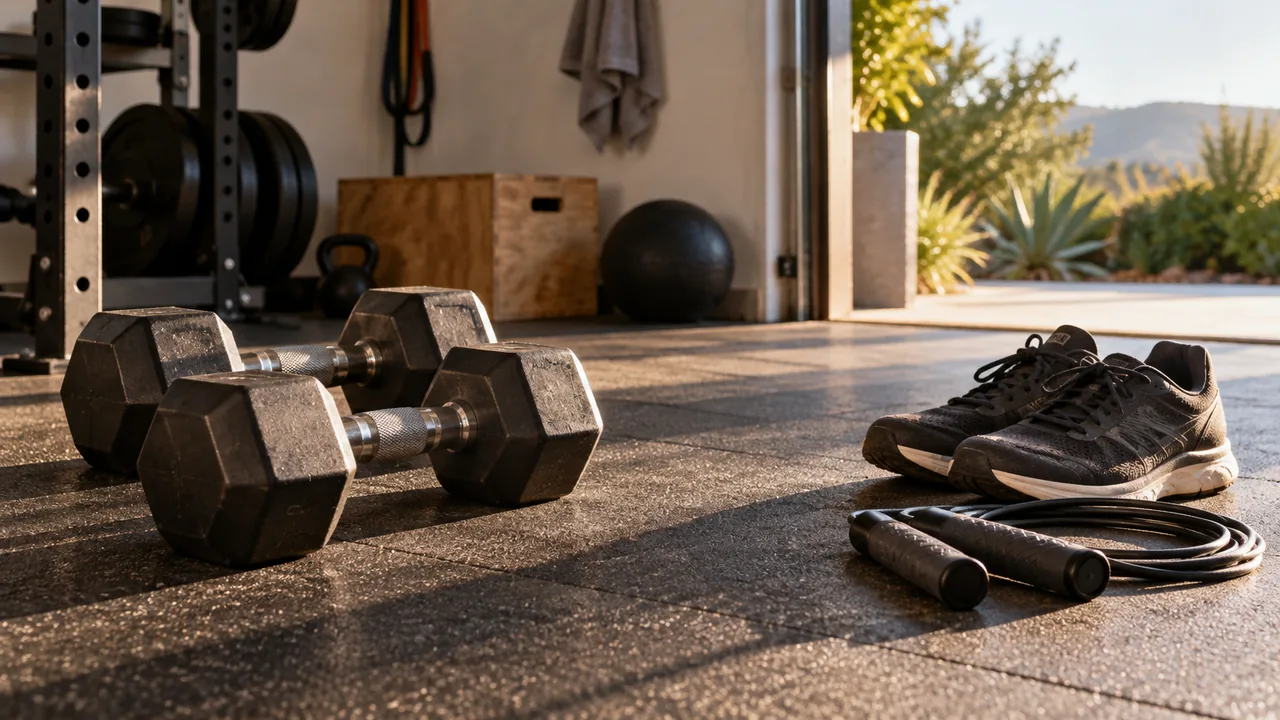
Cardio and strength training do different jobs. Aerobic exercise removes more fat mass for the time spent. Resistance training builds and protects muscle, which shapes how the body looks once the fat comes off. Research has compared them head to head, and official guidelines ask for both. Here is what the trials found and how to combine the two.
What happens when cardio and weights are compared directly?
The most cited comparison is the STRRIDE AT/RT trial, published in the Journal of Applied Physiology in 2012. Researchers at Duke University randomized 119 sedentary, overweight or obese adults to eight months of aerobic training, resistance training, or both.
| Outcome after 8 months | Aerobic only | Resistance only | Aerobic plus resistance |
|---|---|---|---|
| Fat mass | Reduced | Less change than in the aerobic groups | Reduced, not significantly more than aerobic only |
| Body weight | Reduced | Less change than in the aerobic groups | Reduced, similar to aerobic only |
| Lean body mass | Less change than in the resistance groups | Increased | Increased |
| Time required | One program | One program | Both programs, about double the time |
The authors' conclusion was direct. Balancing time against benefit, aerobic training was the best mode of exercise for reducing fat mass and body mass, while a program that includes resistance training was needed to increase lean mass in middle-aged, overweight or obese people.
Does strength training reduce body fat at all?
Yes, by a modest amount. A systematic review with meta-analysis in Sports Medicine, published online in 2021, pooled 54 randomized trials in healthy adults that compared full-body resistance training with no exercise. Resistance training reduced body fat percentage by 1.46 percentage points and body fat mass by 0.55 kg (about 1.2 lb), and it also reduced visceral fat, the deep fat around the abdominal organs.
The review calls resistance training the gold standard for gaining lean muscle, so body weight may change little even when fat is lost. Protecting muscle is the main reason to lift during fat loss. An overview in Obesity Reviews, also from 2021, found that resistance training reduced the loss of lean mass during weight loss by 0.8 kg (about 1.8 lb) on average.
How much fat does exercise remove without a diet?
Less than most people expect. The same overview summarized 12 systematic reviews covering 149 studies in adults with overweight or obesity. Exercise training led to an average weight loss of 1.5 to 3.5 kg (3.3 to 7.7 lb) and a fat loss of 1.3 to 2.6 kg (2.9 to 5.7 lb), along with a reduction in visceral fat.
The American College of Sports Medicine (ACSM) reached a similar conclusion in its 2009 position stand on physical activity and weight. Moderate activity of 150 to 250 minutes a week provides only modest weight loss. More than 250 minutes a week has been associated with clinically significant weight loss. Activity in the 150 to 250 minute range improves weight loss when it is combined with moderate diet restriction. On strength work, the ACSM wrote that resistance training does not enhance weight loss but may increase fat-free mass and increase the loss of fat mass, and that it is associated with reductions in health risk.
Exercise is therefore one part of the plan, next to the calorie deficit from food. Training also influences how much muscle stays.
Is high-intensity interval training better than steady cardio?
Not for fat loss, if the energy used is the same. The 2021 overview found no difference in weight loss, fat loss or visceral fat loss between steady aerobic training and high-intensity interval training as long as energy expenditure was equal. The better choice is the one you will keep doing.
How should you combine strength training and cardio?
The CDC guideline for adults gives the framework, and the research above fills in the details.
- Build an aerobic baseThe CDC says adults need at least 150 minutes of moderate-intensity activity a week, for example brisk walking for 30 minutes on 5 days, or 75 minutes of vigorous activity.
- Lift at least twice a weekThe CDC recommends at least 2 days of muscle-strengthening activity each week. The 2021 review covered full-body resistance programs.
- Add aerobic volume if fat loss is the goalThe ACSM associates more than 250 minutes of moderate activity a week with clinically significant weight loss. The CDC notes that going beyond the basic amounts brings more health benefits.
- Pair training with a moderate calorie deficitIn the ACSM review, activity improved weight loss when diet restriction was moderate.
- If time is short, do not drop either oneShorten both. Cardio moves the fat number, and strength work protects muscle.
Questions people ask
Does lifting weights burn belly fat?
Lifting reduces total body fat modestly. A 2021 systematic review of 54 trials found that resistance training lowered body fat percentage by about 1.5 points and also reduced visceral fat. The review did not test whether lifting removes fat from one chosen area.
Can I lose fat with strength training only?
Some. A 2021 review found that resistance training alone lowers body fat modestly. In an 8-month randomized trial, aerobic training reduced fat mass more than resistance training alone, while resistance training increased lean body mass.
Is HIIT better than regular cardio for fat loss?
A 2021 overview of 149 studies found no difference in fat loss between interval training and steady aerobic training when the energy used was equal.
How many minutes of exercise a week does fat loss take?
The CDC baseline for adults is at least 150 minutes of moderate activity plus at least 2 days of muscle-strengthening work a week. The ACSM associates more than 250 minutes a week with clinically significant weight loss.
Does massage replace a workout for fat loss?
No. Massage does not burn fat and is not exercise. It can be part of recovery and body care between training sessions.
Sources
- Willis LH et al. Effects of aerobic and/or resistance training on body mass and fat mass in overweight or obese adults. Journal of Applied Physiology, 2012
- Wewege MA et al. The effect of resistance training in healthy adults on body fat percentage, fat mass and visceral fat: a systematic review and meta-analysis. Sports Medicine, published online 2021
- Bellicha A et al. Effect of exercise training on weight loss, body composition changes, and weight maintenance in adults with overweight or obesity: an overview of 12 systematic reviews and 149 studies. Obesity Reviews, 2021
- Donnelly JE et al. ACSM Position Stand: Appropriate physical activity intervention strategies for weight loss and prevention of weight regain for adults. Medicine and Science in Sports and Exercise, 2009
- CDC. Adult Activity: An Overview, 2023
This article is general information, not medical advice. Massage does not diagnose or treat any condition. If you have a health condition, ask your doctor whether massage is right for you.
 Fat lossCalorie Deficit for Men: What It Is and How Big It Should Be
A calorie deficit means eating fewer calories than you burn. How to estimate your needs, why 500 a day is the usual start, and why bigger is not better.
5 min read Fat lossCan You Lose Fat and Build Muscle at the Same Time?
Body recomposition is real but depends on where you start. Who manages it in studies, and the training, protein and deficit it takes.
5 min read Fat lossDo Poor Sleep and Stress Cause Belly Fat? What Studies Show
Short sleep makes people eat more and, in a small trial, added abdominal fat. The stress and cortisol link is plausible but less proven.
5 min read