Subcutaneous fat lies just under the skin and can be pinched; it makes up about 90 percent of body fat. Visceral fat lies deep in the abdomen around the organs and is more strongly linked to heart disease and type 2 diabetes. A waist of more than 40 inches (102 cm) in men signals higher risk, according to the NHLBI and the CDC.
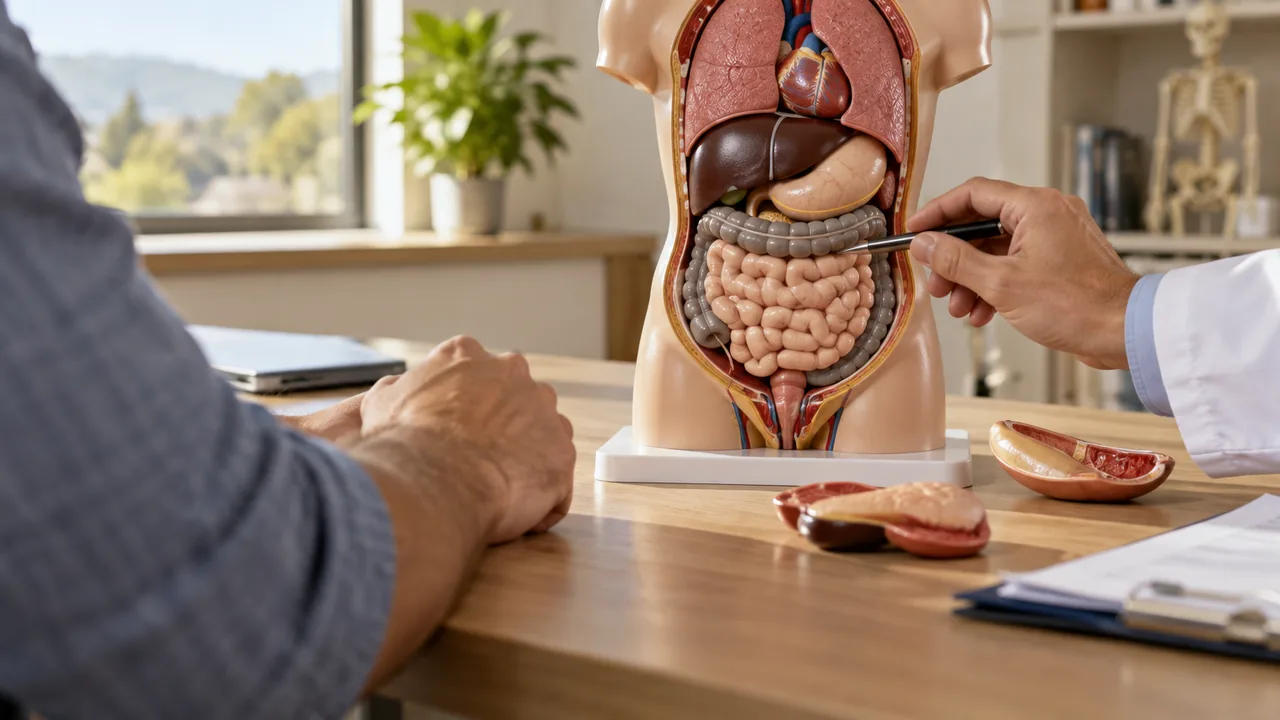
A belly holds two different kinds of fat. One sits right under the skin. The other lies deeper, behind the abdominal muscles and around the organs. They look the same on a scale and behave differently in the body, which is why doctors care more about one than the other. This article compares them using Cleveland Clinic, the National Heart, Lung, and Blood Institute (NHLBI), the CDC and a 2010 review in Obesity Reviews.
What is subcutaneous fat?
Cleveland Clinic describes subcutaneous fat as the fat you can pinch. It is found just under the skin and collects mainly around the hips, buttocks, thighs and belly. For most people it makes up about 90 percent of body fat. Love handles, the soft fat on the sides of the waist, are subcutaneous by this definition.
This layer has jobs. According to Cleveland Clinic, it pads muscles and bones against bumps and falls, gives blood vessels and nerves a path between skin and muscle, and helps control body temperature. Everyone has some, and genetics set the amount a person starts with.
What is visceral fat?
Visceral fat is deeper. Cleveland Clinic describes it as fat that lines the abdominal walls and wraps around the internal organs. It cannot be seen or pinched from outside. A normal amount is about 10 percent of total body fat.
The 2010 review by M. Mohsen Ibrahim adds anatomical detail. Visceral fat is found mainly in the mesentery and omentum, the tissue folds that hold and cover the intestines, and its blood drains directly through the portal vein to the liver. Whatever this fat releases reaches the liver first.
Why is visceral fat considered more dangerous?
The two tissues differ at the level of cells. The 2010 review reports that visceral fat, compared with subcutaneous fat, has more blood vessels and nerves, contains more inflammatory and immune cells, is more metabolically active and is more insulin-resistant. It has a greater capacity to generate free fatty acids. Subcutaneous fat, in contrast, is better at absorbing fatty acids and triglycerides from the blood.
These differences show up in health outcomes. The review states that abdominal obesity carries a greater risk of diabetes and cardiovascular events than fat on the hips and thighs, and that visceral fat predicts mortality more strongly than subcutaneous fat does. Cleveland Clinic likewise notes that research links too much visceral fat to a higher risk of cardiovascular disease.
| Feature | Subcutaneous fat | Visceral fat |
|---|---|---|
| Location | Just under the skin | Deep in the abdomen, around the organs |
| Can you pinch it | Yes | No |
| Share of body fat | About 90 percent for most people | About 10 percent |
| Behavior | Absorbs and stores circulating fat readily | More metabolically active, more inflammatory and immune cells, more insulin-resistant |
| Health link | A large amount is often a sign of excess visceral fat | Stronger link with diabetes, cardiovascular events and mortality |
The two usually travel together. Cleveland Clinic points out that too much subcutaneous fat is often a sign of too much visceral fat as well.
How do you know how much visceral fat you have?
A tape measure is the standard screening tool. The NHLBI states that a waist circumference of more than 40 inches (102 cm) for men, or more than 35 inches (89 cm) for women, increases the risk of heart disease and type 2 diabetes. The CDC uses the same numbers and explains why the waist is measured in addition to body mass index: BMI does not measure belly fat.
- Stand upBoth the CDC and the NHLBI describe the measurement in a standing position.
- Place the tape just above your hipbonesThe NHLBI and CDC both say to wrap the tape measure around your middle at this level.
- Breathe in, then outRead the number just after you breathe out.
- Compare with the thresholdMore than 40 inches (102 cm) for men means higher risk. Cleveland Clinic also cites a waist-to-hip ratio above 0.90 in men as a sign of abdominal obesity.
The waist reflects both layers at once, so it is a screening measure and not a direct reading of visceral fat.
How do you lose visceral fat?
There is no separate method for it. Cleveland Clinic says that maintaining a healthy lifestyle is the best way to lose visceral fat and lists regular physical activity, an eating pattern such as the Mediterranean or DASH diet, enough sleep, lower stress and limited alcohol. It also names the stress hormone cortisol as one hormone that can add to visceral fat stores, and notes that genetics influence how much visceral fat a person has.
The 2010 review describes visceral fat cells as more sensitive to lipolysis, the signal to release stored fat, than subcutaneous fat cells. Subcutaneous fat, including love handles, comes down with the same overall approach: fewer calories in than out, regular exercise, good sleep and stress management, as Cleveland Clinic puts it.
Questions people ask
Are love handles visceral or subcutaneous fat?
Subcutaneous. Cleveland Clinic defines subcutaneous fat as the fat just under the skin that you can pinch. Visceral fat lies deep in the abdomen and cannot be pinched.
What waist size is too big for a man?
The NHLBI and the CDC both say that a waist of more than 40 inches (102 cm) in men is linked with higher risk of heart disease and type 2 diabetes.
Can BMI tell you how much belly fat you have?
No. The CDC notes that BMI compares height with weight and does not measure belly fat, which is why waist circumference is measured as well.
Is subcutaneous fat harmful?
It has useful functions: padding, insulation and energy storage. Cleveland Clinic notes, however, that a large amount of subcutaneous fat is often a sign of too much visceral fat.
Does massage reduce visceral fat?
No. Massage does not burn fat of either type, and visceral fat lies behind the abdominal wall, out of reach of hands and devices. Visceral fat responds to diet, activity and sleep.
Sources
This article is general information, not medical advice. Massage does not diagnose or treat any condition. If you have a health condition, ask your doctor whether massage is right for you.
 Fat lossCalorie Deficit for Men: What It Is and How Big It Should Be
A calorie deficit means eating fewer calories than you burn. How to estimate your needs, why 500 a day is the usual start, and why bigger is not better.
5 min read Fat lossCan You Lose Fat and Build Muscle at the Same Time?
Body recomposition is real but depends on where you start. Who manages it in studies, and the training, protein and deficit it takes.
5 min read Fat lossDo Poor Sleep and Stress Cause Belly Fat? What Studies Show
Short sleep makes people eat more and, in a small trial, added abdominal fat. The stress and cortisol link is plausible but less proven.
5 min read